If you have ever woken up in a cold sweat, screaming, "I wonder what it's like to play a game where I am forced to manually deposit baking ingredients into a cafe owner's inventory before I am allowed to acknowledge the existence of a chef," then congratulations: A Space for The Unbound is the life-altering experience you've been praying for.
For the rest of us, it is an exquisite tale in how to turn potential tragedy into a bureaucratic nightmare. It is a game that has been clamored as a "Masterclass in Emotional Storytelling", delivers a "Digital Chore Simulator" and treats accountability like it's a contagious, lethal disease.
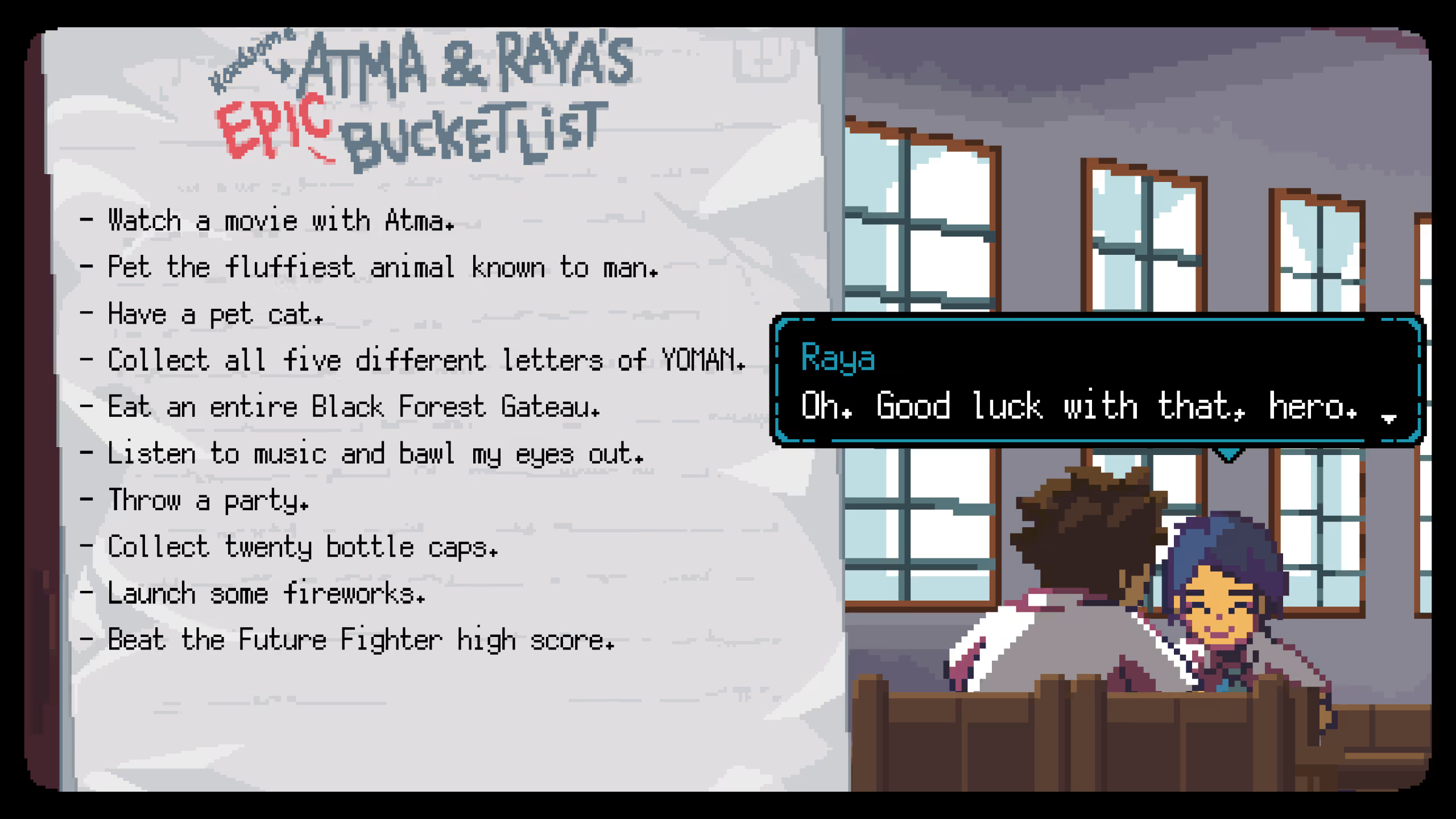
The "Controller Mapping" Opening Gambit
The irony is not lost on anyone. A game titled A Space for The Unbound begins with the rigidly-bound controller settings in modern history. You cannot remap your keys. You are locked in, much like the player is locked into a narrative that seems to have been written by a committee of people who have only ever experienced human emotions through the medium of mediocre anime and meme-laden fan fictions
The Fetch-Questing of the Gods
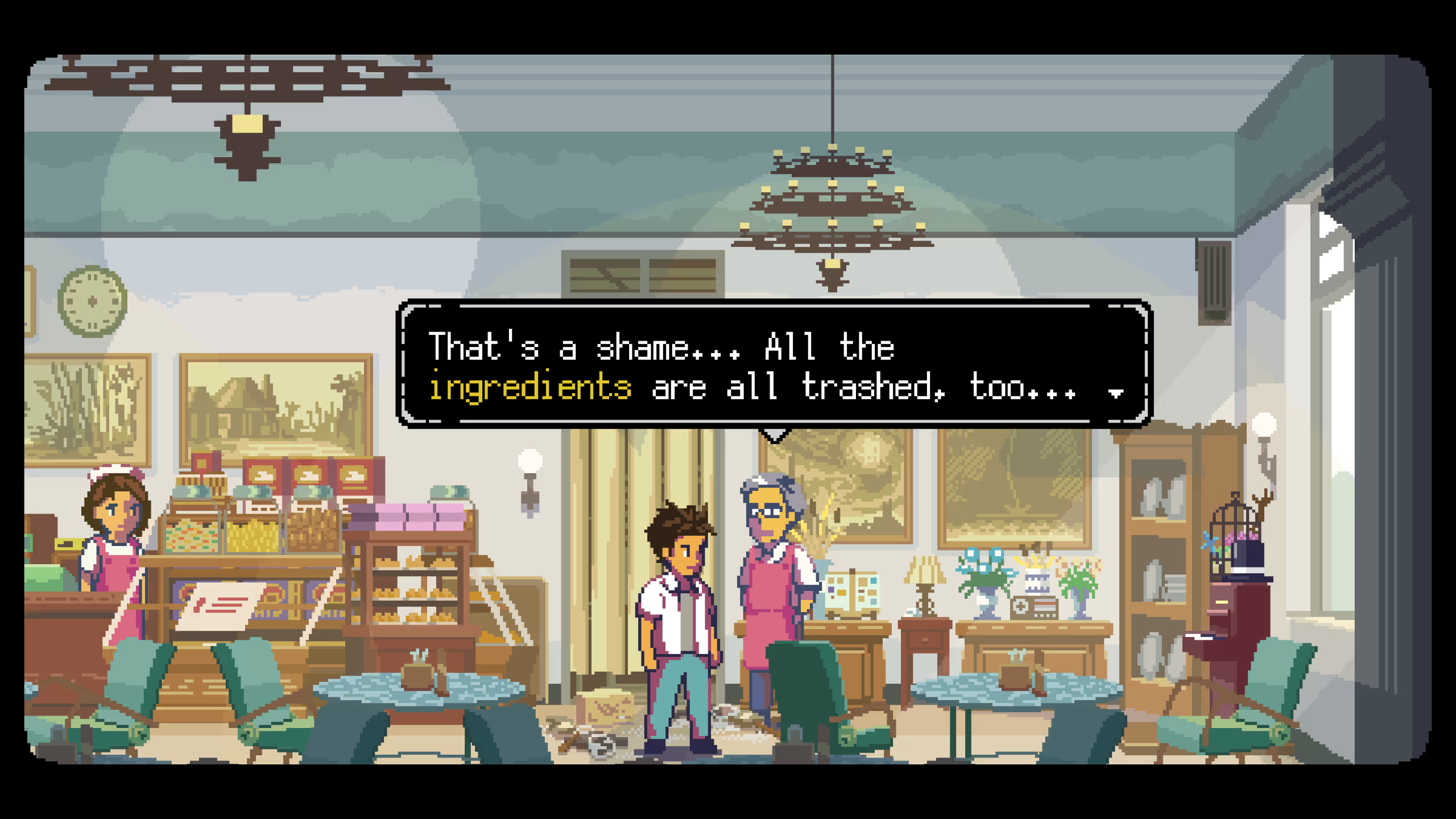
The gameplay loop is a testament to the idea that time is infinite and your patience is a renewable resource. Take the "Cake-Making Saga," a sequence of events so convoluted than a motion machine collaborated by Rube Goldberg and PythagoraSwitch.
You need a cake from a cafe. To get a cake, you must learn to fight, play algebra in a child's mind to get chocolate, engage in poultry matchmaking to get egg, travel through time in someone's mind to get cherry. This causes the chef to spawn in the town, just ask her to make the cake right? Nope. We now have to sabotage three professional chefs in said chef's mind with bitter melon from someone's garden, chili from a street vendor and oil, but wait, the general store owner does not want to give oil in containers. We have to find a dirty container, wash it, hand it to the general store owner, got oil, back to sabotage, and only then the chef went back to the cafe. But the chef will be back for more in later chapter! Who is this chef? Nobody important!
Do we get a bit of story in between? Not at all, the game purely gives you a list of errands disguised as a magical realist journey. It's the Warashibe Chouja (The Straw Millionaire) of video games, but instead of trading up to a mansion, you're trading your sanity for a bit of plot progression.
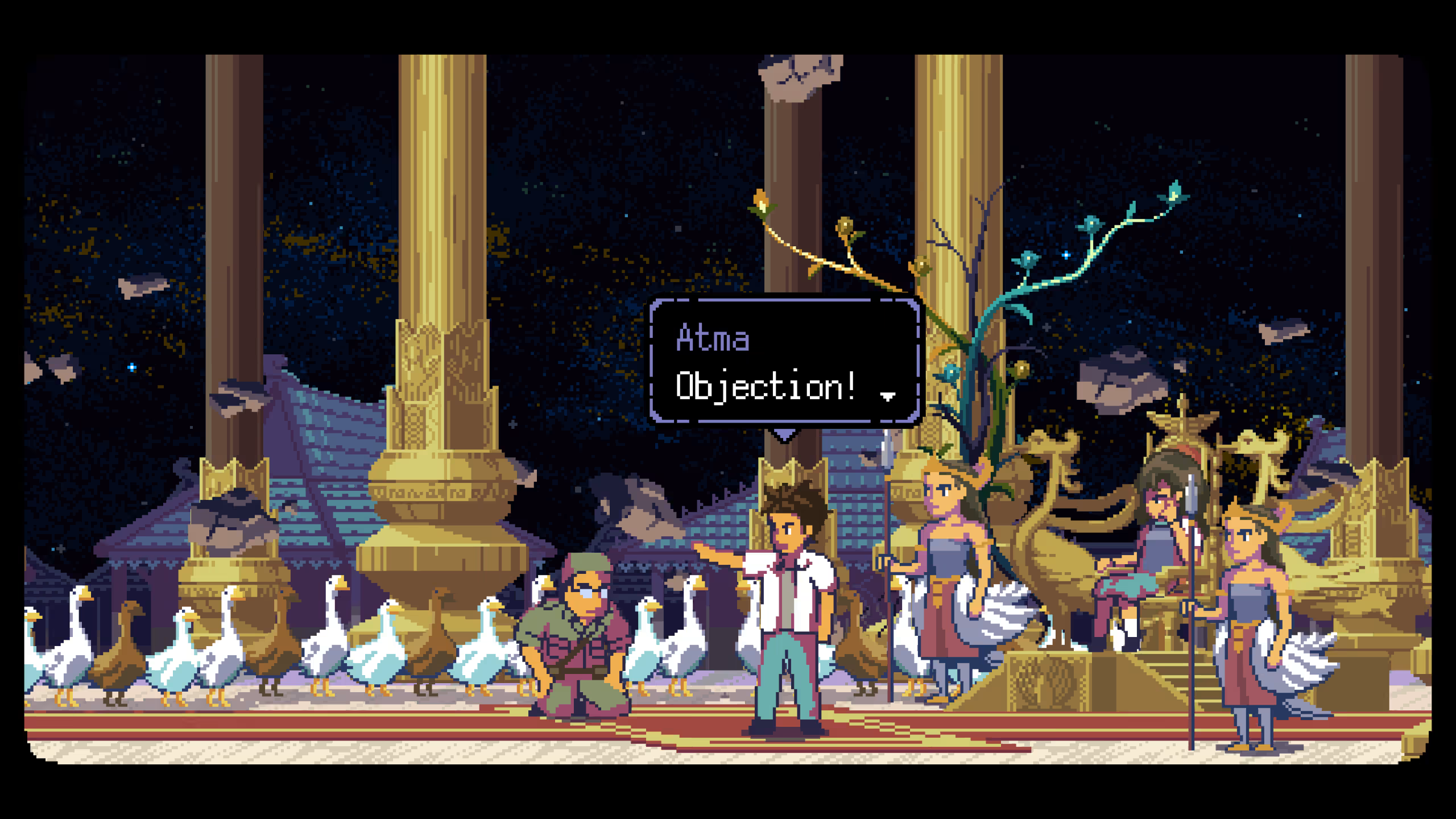
The Courtroom Calamity
Just when you think you've reached the peak of chain quest absurdity, the game decides to pivot into a discount Ace Attorney. Suddenly, you are in a courtroom, complete with "Objection!" shouting and cross-examinations. But let's be clear: this isn't Phoenix Wright; it's a high schooler's power fantasy written in the margins of a math notebook.
The game's true agenda reveals itself here: it's not interested in justice; it's interested in wish fulfillment. It is a desperate, frantic attempt to provide the writer with the catharsis they clearly missed out on in their own teenage years. We aren't solving mysteries; we are participating in a curated revenge loop. You get to kill the bully, you get to prove the teacher is a fool, and you get to torment the student council president; all while being told that you are the most enlightened, misunderstood soul in the room. It's a sad, small-minded power fantasy, masquerading as a profound meditation on the human condition.
To top it off, the world-building is historically questionable. We're in 90s Indonesia, yet street food costs four times its actual value, and local net cafes are equipped with color-printing dot-matrix printers—a technological marvel that apparently bypassed the rest of the world. It's as if the writers used the 90s as a vague aesthetic filter without ever bothering to learn what the decade actually felt like. Oh, wait, we can hand wave it as adult Raya's made-up world isn't it?
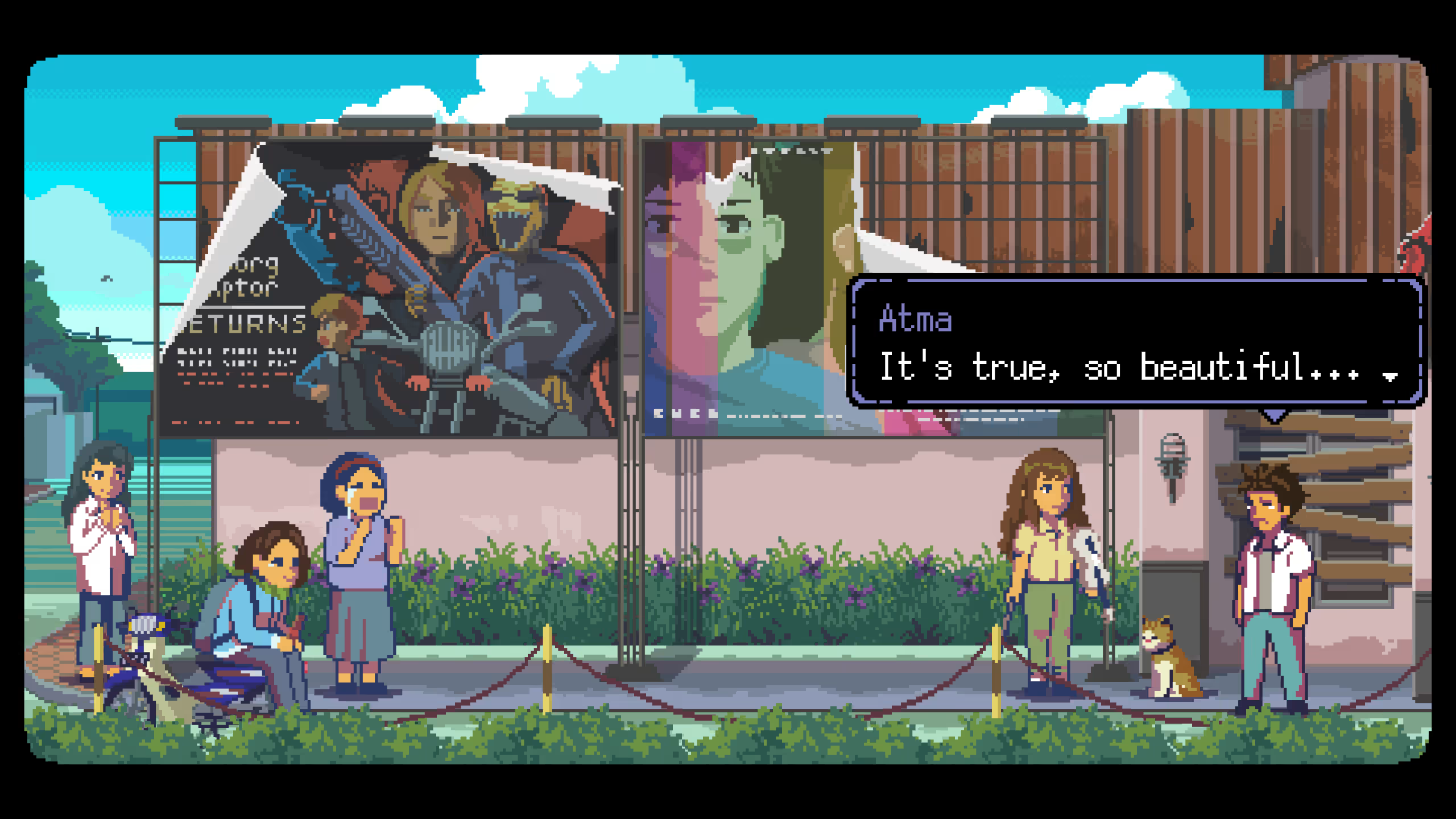
The "Mood-Playlist" Score
Before we get more into the writing, there is the music. Or rather, the "generic Lo-Fi coffee shop playlist" that plays on an endless, soul-crushing loop. The devs should understand that silence is a weapon; used correctly, it allows the weight of a scene to land; but instead, the game treats music as a literal wall of sound, drowning out the atmosphere with acoustic guitar strumming and piano twinkles that are so aggressively "feel-good" they actively conflict with the plot. Even the moments meant to be haunting feel like they were lifted from a royalty-free library marked "Sad Melodies: Volume 1."
There is no leitmotif, no recurring musical DNA that mutates to reflect Atma's or Raya's psychological decay. It's also a missed opportunity that the game does not utilize a more traditional Indonesian instruments during the mind dive or when going to the past.
"I'm 14 and This Is Deep"
The writing occupies that dangerous, swampy territory of "I'm 14 and this is deep." The characters (they are more of road blocks, really) are paper-thin archetypes whose dialogue sounds like it was translated by a robot that was only fed legal depositions and shounen manga.
When a teacher lectures a student that skipping class will make them into "corrupt officials", it's an anachronistic social commentary; it's a clunky attempt to sound "local" that completely ignores the very real danger of living in late-90s Indonesia.
What about "metaphors"? They are delivered with the subtlety of a lead pipe. The framing exists to hand-wave the narrative's lack of internal logic, essentially saying, "Oh, it's not actually an death/mutation/apocalypse/, it's just a manifestation of Raya's perception!"
It's Important that We Drop This Meme
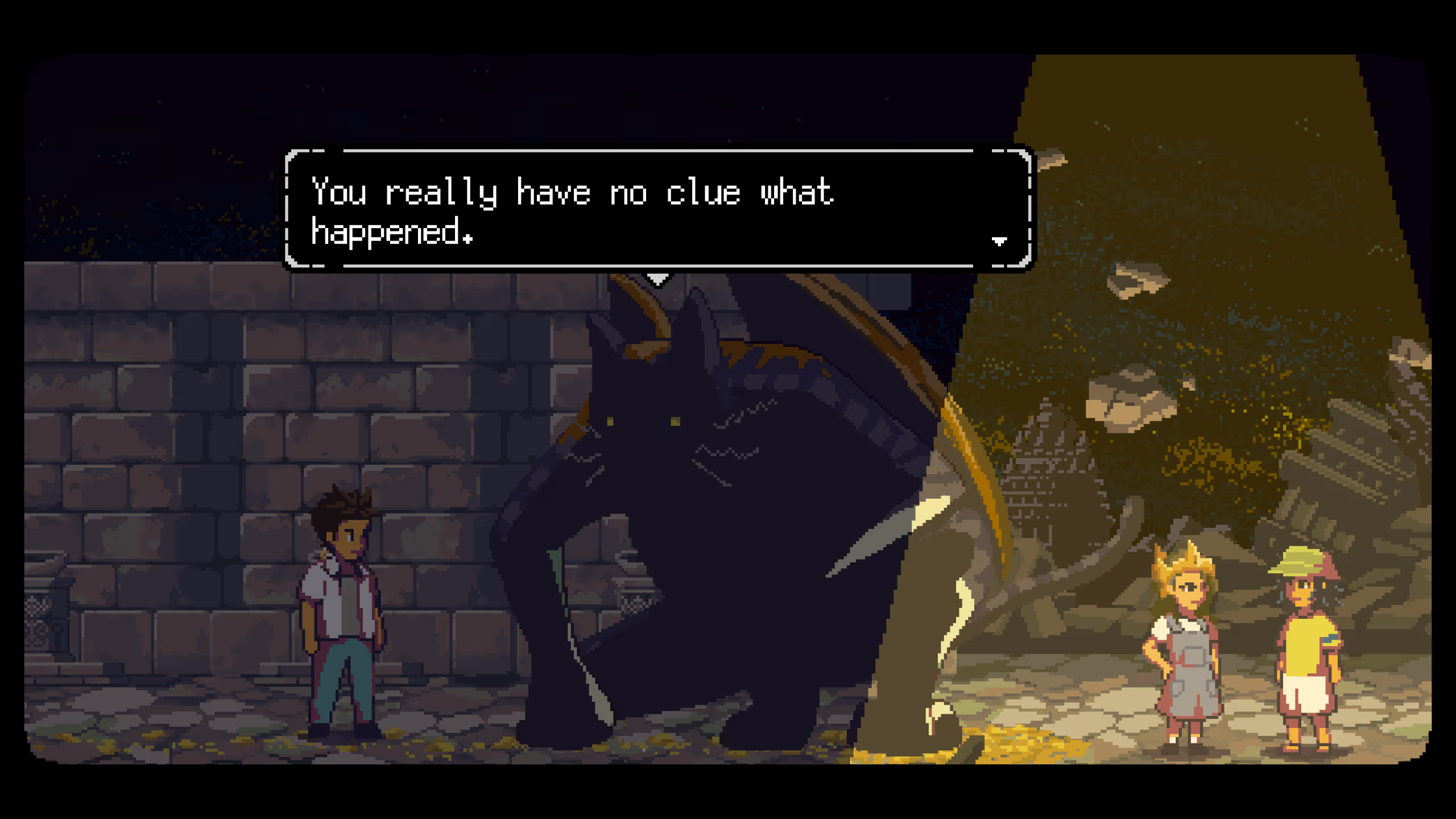
The writers are also such writing conquerors: in an impending psychological collapse, Bosque the cat stares into your soul, says "You shall not pass," and then immediately pivots to serious, exposition-heavy plot dialogue without any gravitas on its speech. It's a great mood whiplash.
Their willing to incinerate the tone of their own game just to prove they've seen a movie breaks immersion; it serves as a reminder that you aren't playing a cohesive narrative, but a collection of "cool things" the developers found on the internet.
Drinking Gasoline
A Space for The Unbound is the final boss of edgy teenager literature. The characters are little more than mouthpieces for the writer's internal monologue, and they are, to a person, utterly insufferable: Raya is a chaotic force of nature who treats reality like a personal toy box; Lulu is a shrill caricature of authority; and Marin is a self-appointed philosopher who speaks exclusively in CRYPTIC METAPHORS that mean absolutely nothing if you possess even a functioning grasp of basic syntax.
I'm genuinely worried about people who praised the story.
The Accountability Dodge
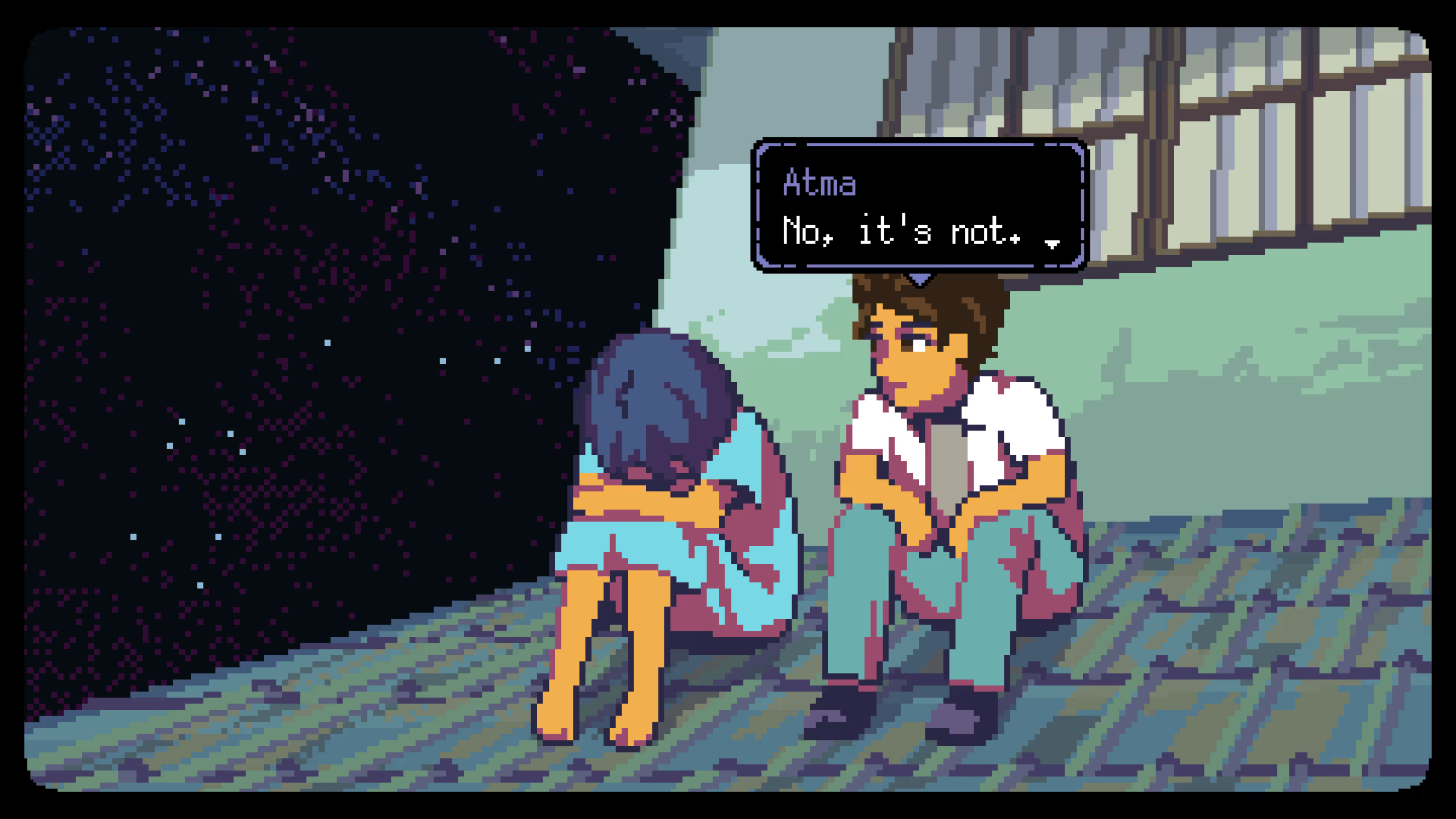
The true villain of this story isn't the giant shadow monster; it's the protagonist's total immunity to consequences. Raya is a character who ruins lives, torments her peers, and gaslights her own friends, yet the game constantly pivots to ensure she never has to utter a sincere "I'm sorry."
When she finally manages an apology, it is directed at a cat. The human beings she traumatized? They are just "memory fragments," so tormenting them is fine! Raya berates her debt-ridden abusive father for her own academic failures and the game treats it as an "empowered moment." It is essentially the story of someone who refuses to grow up, framed as a triumphant journey of self-discovery.
The game treats and insists that Raya's trauma is a sovereign nation: a law unto itself where accountability cannot enter. By the end, she isn't a person learning from mistakes; she's a reality-warping teenager who has successfully argued that because she is sad, the rest of the world is obligated to apologize to her. It took a whole lot of talent to be able to avoid accountability this much.
Play Better Games and Read Better Story
We have seen genuine, gut-wrenching stories that handle trauma and loss with grace. My Memory of Us, with the haunting narration of Sir Patrick Stewart, proves you can tell a devastating story of war and loss without turning the protagonist into an unaccountable force of nature. Even Junji Ito's Gentle Goodbye packs more emotional weight into a few manga panels than this ten-hour game manages to squeeze out of its entire, bloated runtime.
A Space for The Unbound is a game that thinks it is a profound exploration of the human heart, when in reality, it is a shiny, pixelated obstacle course designed to distract you from the fact that it has nothing meaningful to say.
The glitching has nothing to do with computers. The time travel is just a Steins;Gate rip-off used for padding. And the "True Ending"? It's just another chore on the list. If you value your time, stay unbound.
But at least, it ends with a good ending.